
Biomedical Imaging Core
About the Core
The Biomedical Imaging Core (BIC) within the Big Data Health Science Center (BDHSC) is being launched to accelerate interdisciplinary research that integrates imaging, data science, and advanced analytics. The Core’s mission is to advance health science discovery by combining cutting‑edge imaging technologies with methods in AI, machine learning, statistics, and large‑scale data integration. This includes supporting the development of imaging biomarkers, multimodal datasets, translational research pathways, and tools that connect imaging with electronic health records, genomics, and other health data sources.
The Biomedical Imaging Core aims to serve faculty across engineering, medicine, public health, computer science, neuroscience, and any field that uses, or wants to use, imaging data. It will provide resources such as consultation on imaging analytics, support for pipeline and protocol development, opportunities for collaborative project formation, and structured activities that promote cross‑disciplinary networking. The Core will actively facilitate interdisciplinary grant development, including multi-investigator proposals and center-level funding initiatives.
In its inaugural year, the Core will leverage the BDHSC’s existing infrastructure and seminar platforms to build community and establish visibility, focusing on several key areas of activity. In the first quarter, the Core will release a landing page, provide guidance on how faculty can engage, organize a kickoff seminar, and assemble a campus‑wide map of imaging resources. The second quarter will emphasize training and community‑building through hands‑on workshops in imaging analysis and a continuing seminar series. Later in the year, the Core plans to host an imaging‑focused hackathon, initiate cross‑disciplinary “research pods” to stimulate new collaborations, and contribute an imaging track to the BDHSC annual conference. By the end of the year, the Core will produce a formal impact summary and propose a longer‑term structure and budget.
Faculty are invited to become Affiliates of the Biomedical Imaging Core. Affiliates will receive early access to workshops and seminars, engagement in collaborative research activities, invitations to community events such as hackathons or case competitions, and opportunities to join interdisciplinary pilot teams. They will also gain visibility on BDHSC platforms and may request consultation or involvement in Core‑supported projects. Affiliate membership is free during the Core’s first‑year launch phase, making this an ideal time for faculty to engage while shaping the Core’s future direction.
If you are interested in affiliating with the BDHSC Biomedical Imaging Core, participating in upcoming activities, or contributing expertise, you are warmly invited to connect with Dr. Boltin at BOLTINN@mailbox.sc.edu or Dr. Hadj-Amar at HADJAMAR@mailbox.sc.edu.
Membership
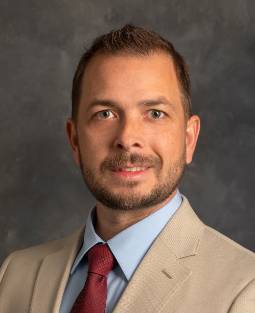
Nicholas Boltin, PhD
Core Co-Lead
Dr. Boltin’s research focuses on developing decision support systems for the healthcare industry. Data Science is an interdisciplinary field that employs techniques from many disciplines such as mathematics, statistics, information science and computer science. The focus of our research is categorized into two broad areas: One, to glean information from data utilizing analytical techniques including data mining, statistical analysis, dimension reduction, supervised and unsupervised machine learning, as well as predictive modeling. Two, design and evaluate translational informatic tools created to deploy sophisticated algorithms using the latest in software development and human computer interaction.
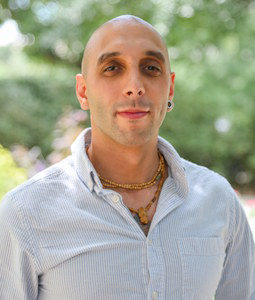
Beniamino Hadj-Amar, Ph.D.
Core Co-Lead
Dr. Beniamino Hadj-Amar’s research lies at the intersection of statistics, machine learning, and scientific application, with a focus on Bayesian methods for analyzing complex time series data. He develops flexible models to capture non-stationary, non-linear, and sparse patterns, leveraging tools such as switching models, change-point detection, Gaussian processes, Bayesian nonparametrics, graphical models, and spectral analysis. He applies these methods across diverse scientific domains, including neuroscience, respiratory medicine, and wearable health monitoring. Much of his work focuses on data collected from wearable devices-such as actigraphy, skin temperature, and circadian monitoring-to study behavioral and physiological rhythms in individuals with epilepsy and other clinical populations. He also collaborates on neuroscience studies involving neuromodulator dynamics, analyzing neural signals from fMRI, EEG, and electrochemical recordings. In respiratory research, he contributes to the modeling of airflow traces to better understand disordered breathing during sleep.